
Why Awareness of Slip & Fall Laws Matters
Slip and fall accidents can happen in an instant, often leaving victims with serious injuries and unexpected medical expenses. While some trips and falls are just unfortunate accidents, Connecticut law recognizes that property owners have a legal responsibility to maintain safe premises.
When property owners fail to uphold this duty, injured individuals may have the right to pursue compensation. Understanding the intricacies of slip and fall laws in Connecticut is crucial for anyone seeking to protect their rights and make informed decisions following an accident.
Connecticut premises liability law establishes the framework for when a property owner may be held liable for injuries caused by unsafe conditions. By understanding these key legal principles, East Haven residents can better navigate the aftermath of a slip-and-fall accident and determine when legal intervention may be appropriate.
Connecticut’s Duty of Care for Property Owners
Property owners in Connecticut are legally required to maintain their premises in a reasonably safe condition for visitors.
This duty varies depending on the type of visitor and the circumstances:
Duty to Invitees
Property owners owe the highest level of care to invitees, including customers, clients, or anyone on the property for business purposes. This duty includes inspecting for hazards, warning of known dangers, and taking reasonable steps to correct unsafe conditions.
Duty to Licensees
Licensees, such as social guests, are owed a lower standard of care. Property owners must warn licensees of any known hazards that are not obvious, but they are generally not required to inspect or correct unknown dangers.
Duty to Trespassers
While property owners owe minimal duty to trespassers, they cannot willfully or recklessly create conditions that could cause injury. In some cases, exceptions exist for child trespassers under the doctrine of attractive nuisance.
Types of Slip & Fall Hazards Recognized by Connecticut Law
Connecticut courts recognize a wide range of conditions that may form the basis for a premises liability claim, including:
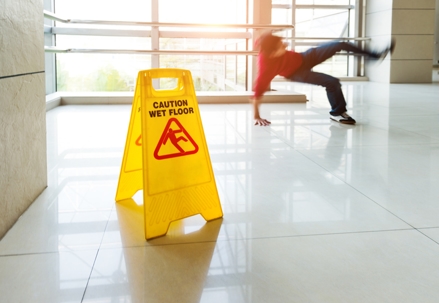
- Slippery or Wet Surfaces. Conditions such as wet floors, recently waxed surfaces, or ice accumulation can be considered hazardous if the property owner failed to take reasonable precautions.
- Uneven or Damaged Flooring. Broken tiles, cracked sidewalks, and uneven pavement can create tripping hazards that may lead to serious injury.
- Obstructions and Debris. Objects left in walkways, cluttered stairwells, or poorly stored equipment can contribute to falls and signal negligence if left unaddressed.
- Inadequate Lighting. Poorly lit areas, including stairways and parking lots, can obscure dangerous conditions, creating foreseeable risks that property owners must mitigate.
- Unsafe Stairs or Handrails. Missing, loose, or defective handrails and stairs are a common source of accidents and fall squarely within the realm of premises liability concerns.
Establishing Liability in Connecticut Slip & Fall Cases
To pursue a successful slip and fall claim in Connecticut, injured parties must generally demonstrate several key elements:
- Ownership or Control of the Property
The defendant must have had legal control over the premises where the accident occurred. This includes landlords, business owners, and in some cases, homeowners.
- Notice of Hazard
The property owner must have known or reasonably should have known about the dangerous condition. Constructive notice can be established if the hazard existed long enough that the owner should have discovered it through routine inspection.
- Breach of Duty
The injured person must show that the property owner failed to take reasonable steps to correct or warn about the hazard, thereby breaching their legal duty of care.
- Causation
The plaintiff must prove that the breach directly caused the injury. This often involves reviewing medical records, gathering witness statements, and consulting expert testimony to establish the link between the hazard and the injury.
- Damages
Connecticut law allows recovery for both economic damages, such as medical bills and lost income, and non-economic damages, including pain and suffering. Proper documentation of expenses and the impact on daily life strengthens a claim.
Comparative Negligence in Connecticut
Connecticut follows a modified comparative negligence system. This means that if an injured person is partially responsible for their own fall, their compensation may be reduced in proportion to their share of fault.
Example of Comparative Negligence
If an individual slips on a wet floor but is not wearing suitable footwear, a court might assign 25% of the fault to the injured party. In this scenario, any award would be reduced by 25%. Understanding comparative negligence is critical when assessing the potential outcome of a claim.
Special Considerations for Business & Public Property
Slip and fall claims can arise in both private and public settings, but there are nuances depending on the type of property involved:
- Commercial Properties. Businesses have heightened responsibilities to ensure customer safety. Regular inspections, prompt cleanup of spills, and proper signage are expected to meet the legal standard of care.
- Residential Properties. Homeowners have responsibilities primarily toward invitees and licensees, and may not be liable to trespassers except in limited circumstances.
- Government-Owned Property. Claims against municipal or state property are subject to specific statutory procedures, including notice requirements and limited liability protections. Prompt legal advice is often necessary to navigate these cases successfully.
Documentation & Evidence Collection
Strong evidence is crucial for proving a slip and fall claim. It is important to collect:
- Photographs & Videos. Document the hazardous condition immediately after the accident, capturing angles and context to support the claim.
- Witness Statements. Testimonies from bystanders or other individuals present at the scene can corroborate the circumstances of the fall.
- Medical Records. Comprehensive medical documentation establishes the extent of injuries and supports the damages component of a claim.
- Incident Reports. If available, reports filed with the property owner or management can serve as valuable evidence of the hazard and the owner’s awareness.
Timelines & Legal Deadlines
Connecticut has specific statutes of limitations that govern slip and fall claims.
Personal Injury Claims
Typically, a slip and fall lawsuit must be filed within two years from the date of the accident.
Claims Against Municipalities
If the fall occurs on public property, shorter notice requirements often apply, and failure to comply may bar the claim.
Prompt Action Is Key
Gathering evidence quickly and notifying the responsible party can significantly strengthen a case and protect your right to compensation.
Protecting Your Rights After a Slip & Fall
Injuries from a slip and fall can have lasting physical and financial consequences. Residents of East Haven should be aware of their rights and the legal avenues available to them for seeking compensation when negligence is involved. Action Law Group offers expert guidance in navigating complex premises liability claims.
By understanding Connecticut’s slip and fall laws, individuals who have been injured can take informed steps to document hazards, report incidents, and pursue recovery effectively. Our team is dedicated to ensuring property owners are held accountable for unsafe conditions and that victims receive the support they need to recover.
If you have been injured in a slip and fall accident, you can trust Action Law Group to provide skilled, compassionate legal representation. Call (203) 439-3143 or contact us online to schedule a consultation and protect your rights.